Building intelligence is the structured data layer that helps property managers understand the condition of their buildings before problems become expensive. It turns inspection photos, drone captures, 3D models, thermal images, and defect reports into usable information for maintenance planning, capital budgeting, contractor coordination, and owner communication.
The important shift is simple: a building inspection should not end as a PDF that gets filed away. If the inspection does not create reusable building data, the next inspection starts from scratch. The team pays again to rediscover the same roof conditions, facade defects, drainage risks, or access problems.
Building intelligence changes that. It gives property teams a permanent record they can measure, annotate, compare, and share.
Building intelligence is more than a building inspection
A traditional inspection is usually a point-in-time event. Someone visits the building, captures notes and photos, writes a report, and sends the findings to the owner or property manager. That can be useful, but it often leaves the team with fragmented information.
Building intelligence is different. It is the reusable record created from inspection data. It connects what was seen, where it was found, how severe it is, what changed over time, and what should happen next.
For a property manager, that difference matters. You are not just asking, “Was the roof inspected?” You are asking:
- Where exactly is the defect?
- How severe is it?
- Has it changed since the last inspection?
- Can a contractor see the same evidence before visiting the site?
- Can the owner, board, or capital planning team understand the risk?
Those questions are hard to answer from a folder of disconnected photos. They are easier to answer when the building has a digital condition record.
What data goes into building intelligence?
Building intelligence can include several layers of information. The exact mix depends on the property, but the core inputs usually include:
- High-resolution roof and facade imagery
- Drone-based exterior data collection
- 3D digital twins of the building envelope
- Thermal imagery for moisture, membrane, and heat-loss signals
- Defect annotations tied to exact building locations
- Measurements for surfaces, distances, and affected areas
- Condition reports that can be shared with contractors or stakeholders
- Historical comparisons across inspection cycles
The value is not in any single image or model. The value is in connecting those data points so the building becomes easier to understand and manage.
Why property managers need building intelligence
Property managers are often forced to make decisions with incomplete information. A leak appears. A contractor gives a quote. A board asks why the repair was not planned earlier. An owner wants to know whether the problem affects one building or the whole portfolio.
Without building intelligence, the team is often working from memory, scattered reports, and old photos. That creates avoidable risk.
With building intelligence, property teams can make decisions from a clearer record. They can prioritize repairs before budget season, brief stakeholders with evidence, give contractors better scopes, and compare building condition year over year.
For commercial real estate, multifamily housing, HOA communities, campuses, and infrastructure assets, this is not just an inspection upgrade. It is an operating advantage.
Where drone inspection fits
Drones are not the product. They are one of the fastest ways to collect high-quality exterior building data.
That distinction matters. A basic drone provider may deliver a folder of roof photos. That can help, but it is not building intelligence. Property teams need the data organized, located, measured, categorized, and tied to a building record they can use after the flight is over.
Drone inspection is especially useful for roofs, facades, towers, large industrial buildings, multifamily portfolios, and places where scaffolding or rope access would be expensive, slow, or disruptive. But the drone is only the capture method. The outcome should be better building knowledge.
What a 3D digital twin adds
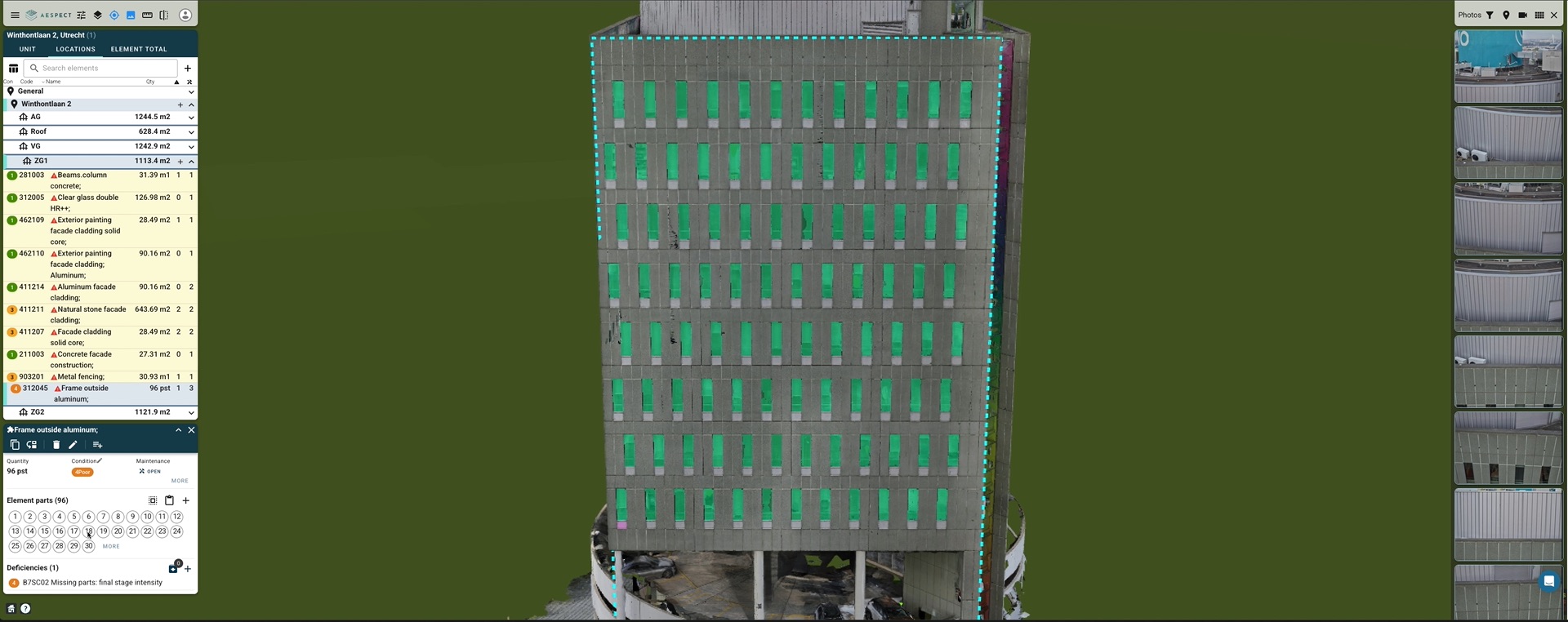
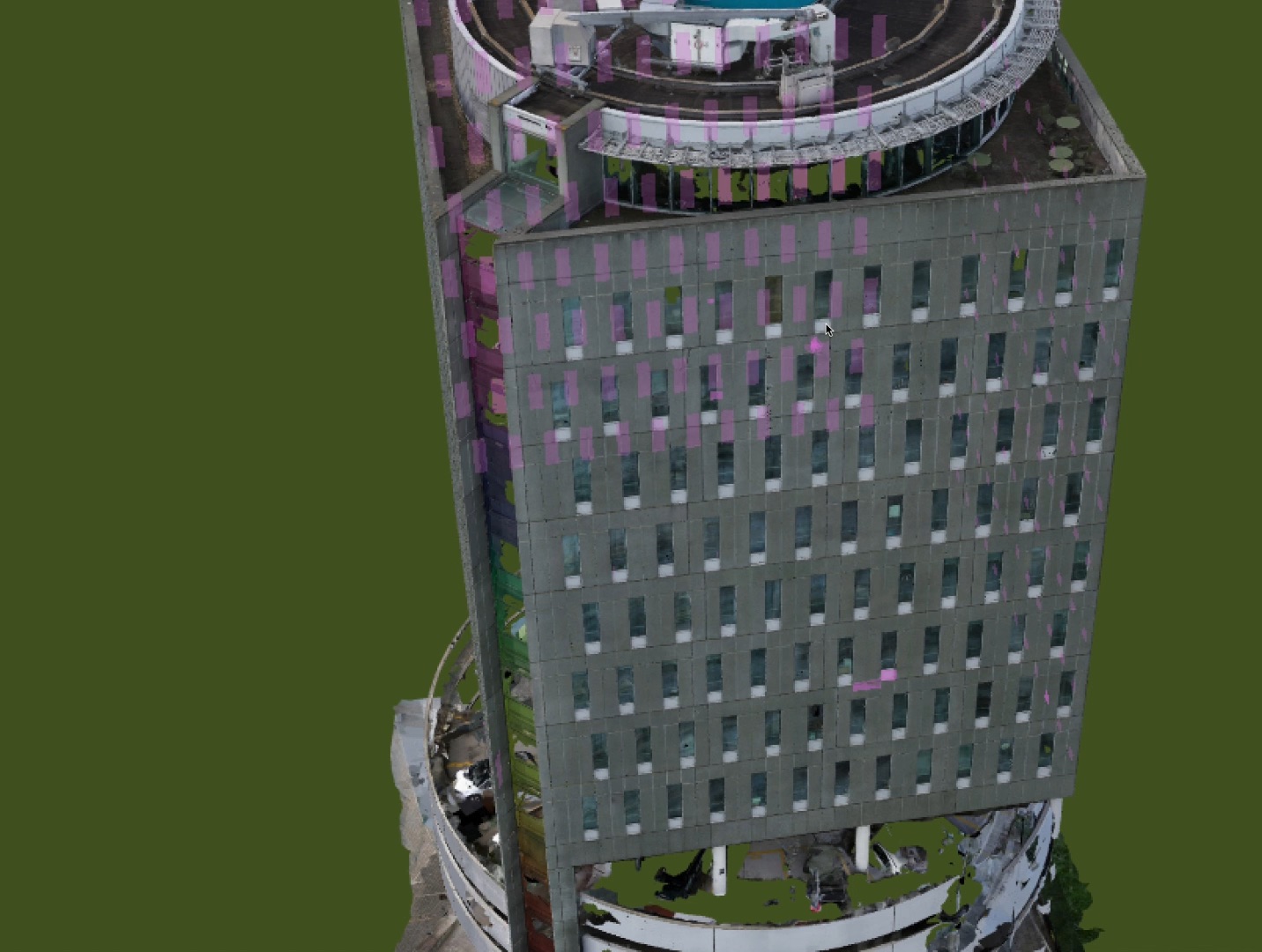
A 3D digital twin gives the inspection data a spatial home. Instead of looking at isolated photos, teams can navigate the building digitally, locate defects on the model, take measurements, and share the same view with owners, boards, engineers, contractors, or insurers.
That shared view reduces confusion. Everyone can see the same condition data in context. A crack, membrane issue, stain, or facade concern is not just described in a report. It is tied to the exact place on the building.
European proof: building intelligence at portfolio scale
AerialSpect is the US operation of Aeroscan Netherlands. That matters because this approach is not theoretical. Aeroscan has digitized more than 40,000 assets across Europe and logged more than 10,000 flight hours.
The proof points are specific:
- WoonFriesland: 21,000 housing units digitized with a resident communication workflow.
- Woningbelang: 4,500 units across 226 complexes in a three-year digitization program.
- NS Railways: Utrecht Central Station captured in 3 hours with zero passenger disruption.
- Erasmus University: campus inspections using high-resolution imagery, thermal imaging, and airspace coordination.
The lesson for US property teams is clear: building intelligence works best when it is treated as an operating system for condition data, not as a one-time photo exercise.
How to start building intelligence for a property portfolio
You do not need to digitize every building at once. The best starting point is usually the part of the portfolio where uncertainty is most expensive.
- Identify high-risk roofs, facades, or exterior systems.
- Capture current condition with high-resolution imagery and drone data.
- Create a 3D digital record where the condition data can live.
- Annotate defects and rank them by severity.
- Use the findings to prioritize repair scopes and capital planning.
- Repeat the inspection before budget season or on an annual cycle.
The goal is not to collect more data for its own sake. The goal is to reduce guessing.
FAQ
What is building intelligence?
Building intelligence is the structured data layer that helps property teams understand building condition. It combines inspection imagery, drone data, 3D digital twins, thermal information, defect annotations, measurements, and historical comparisons into usable information for maintenance and planning.
How is building intelligence different from a building inspection?
A building inspection is usually a point-in-time event. Building intelligence is the reusable record created from inspection data so teams can compare, share, measure, and act on building condition over time.
Do you need drones to create building intelligence?
No, but drones are one of the fastest ways to collect accurate exterior building data. They are especially useful for roofs, facades, tall buildings, large portfolios, and hard-to-access sites.
How does building intelligence help with capital planning?
Building intelligence gives property teams clearer evidence before budget season. It helps identify which repairs are urgent, which can wait, and what documentation owners, boards, contractors, or insurers need to make decisions.
The bottom line
Property managers do not need another folder of inspection photos. They need a reliable way to know their buildings before problems become expensive.
That is the promise of building intelligence: less guessing, better evidence, and a permanent building record your team can use long after the inspection is complete.